
 EN
EN



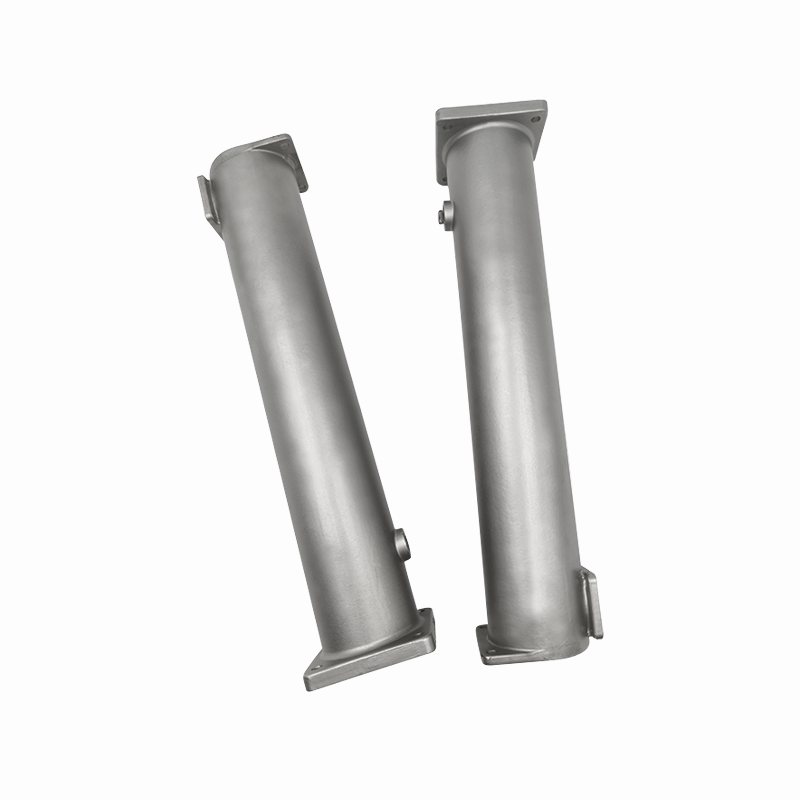
The ancient technique that refuses to stay in the past
Lost wax casting—or investment casting, as it‘s often called in industrial circles—has been around for thousands of years. Ancient artisans used it to produce bronze statues and jewelry with intricate detail that other methods simply couldn’t replicate. Fast forward to today, and the same fundamental principle is being used to manufacture turbine blades for jet engines and surgical implants that save lives. That kind of staying power doesn‘t happen by accident.
What makes this process so remarkably versatile? The answer lies in a combination of factors that other casting methods struggle to match.
Precision that doesn’t quit
The hallmark of lost wax casting is its ability to produce parts with exceptional dimensional accuracy. The wax pattern can be molded or 3D-printed to near-perfect specifications, and the ceramic shell that forms around it captures every minute detail. Once the wax is melted out and the metal is poured in, what comes out is a part that often requires little to no secondary machining.
That level of precision matters whether you‘re crafting a delicate piece of jewelry or a critical component for an aerospace application. The tolerance ranges achievable through investment casting—typically within ±0.005 inches per inch—put it in a league of its own compared to sand casting or permanent mold casting. For industries where a fraction of a millimeter can mean the difference between a part that functions and one that fails, that accuracy is non-negotiable.
Complex geometries without the headache
Try machining a part with internal cooling channels, undercuts, or thin-walled sections from a solid block of metal. It‘s expensive, time-consuming, and often simply impossible. Lost wax casting sidesteps this problem entirely.
The wax pattern can be assembled from multiple pieces, allowing for internal cavities and complex passageways that would be unthinkable with traditional machining. This is why the aerospace industry relies on investment casting for turbine blades with intricate cooling systems. It’s also why medical device manufacturers turn to it for orthopedic implants that need to mimic the complex geometry of human bone.
For artists, this translates to the freedom to realize designs that push the boundaries of form and detail without being constrained by tooling limitations. For engineers, it means functional integration—consolidating multiple components into a single casting that reduces assembly time and eliminates potential failure points.
Material flexibility that opens doors
One of the most underappreciated strengths of lost wax casting is its compatibility with an unusually wide range of materials. The process works with ferrous and non-ferrous metals alike—stainless steels, alloy steels, copper-based alloys, aluminum, titanium, and even superalloys that can withstand extreme temperatures.
This material flexibility means the same foundry can produce a stainless steel surgical instrument one day and a nickel-based superalloy turbine component the next, with minimal retooling. The ceramic shell doesn‘t care what you’re pouring into it, as long as the metal‘s melting point stays within the shell’s tolerance range.
For businesses that need to source parts across different material families, this versatility simplifies supply chain management considerably. One process, one set of tooling principles, one quality control framework—applied across a broad spectrum of materials.
The cost equation that changes with volume
Let‘s be direct about the economics. Lost wax casting isn’t cheap on a per-part basis at low volumes. The tooling—the wax injection dies and the ceramic shell materials—carries a higher upfront cost than sand casting patterns.
But here‘s where the math flips. Investment casting tooling costs are typically far lower than die casting tooling—sometimes by a factor of five to ten. And at volumes below roughly 5,000 units, investment casting often becomes the more economical choice compared to die casting, where high tooling costs need to be amortized over much larger production runs.
| Factor | Lost Wax (Investment) Casting | Sand Casting | Die Casting |
|---|---|---|---|
| Dimensional accuracy | Excellent (32–63 RMS) | Moderate | Good (60–120 RMS) |
| Surface finish | Very smooth | Rough | Smooth |
| Design complexity | High (undercuts, internal passages possible) | Limited | Moderate |
| Tooling cost | Moderate | Low | High (5–10x investment) |
| Volume suitability | 100–5,000+ parts | Any volume | 5,000–1,000,000+ parts |
| Post-machining required | Minimal | Significant | Moderate |
The real cost savings, however, come from what you don‘t have to do afterward. Near-net-shape parts that require minimal finishing mean less machining time, less material waste, and fewer opportunities for errors to creep in during secondary operations.
A case from the shop floor
A mid-sized medical device manufacturer was struggling with a particular component—a stainless steel surgical instrument with a complex internal lumen and thin-wall sections. They had been machining it from bar stock, but the scrap rate was hovering around 18 percent, and each part took nearly 45 minutes of machine time.
The switch to lost wax casting changed the picture entirely. The wax pattern was assembled around a soluble core that created the internal lumen. After casting, the core was dissolved away, leaving a perfectly formed passageway. Scrap dropped to under 4 percent, and cycle time per part—from wax injection to finished casting—was measured in hours rather than the cumulative machine time of the previous approach.
The foundry that handled this transition wasn‘t doing anything revolutionary. They were simply applying a process that has been refined over centuries to a modern manufacturing challenge. That’s the quiet genius of lost wax casting—it‘s ancient enough to be proven, yet flexible enough to solve problems that didn’t exist a generation ago.
Where the process hits its limits
No process is perfect, and lost wax casting has its constraints. Part size is limited by the practical realities of shell building and handling—most foundries cap out well below 100 kilograms per casting. The ceramic shell process is also labor-intensive compared to automated sand molding, which keeps per-part costs higher at very high volumes.
For applications that require extremely large castings or production runs in the hundreds of thousands, other methods may be more appropriate. But for the vast middle ground—complex parts in moderate volumes, where precision and surface finish matter—lost wax casting remains hard to beat.
The foundry that makes it work
Companies like Jinbianda Foundry have built their operations around the versatility of investment casting, serving industries from automotive and medical to power equipment and fluid handling. The ability to handle diverse materials, complex geometries, and varying production volumes under one roof is what makes this process so valuable to modern manufacturing. Whether the end product is a piece of industrial equipment or a precision medical device, the foundry‘s role is to translate design intent into physical reality—and lost wax casting gives them the tool to do exactly that.