
 EN
EN



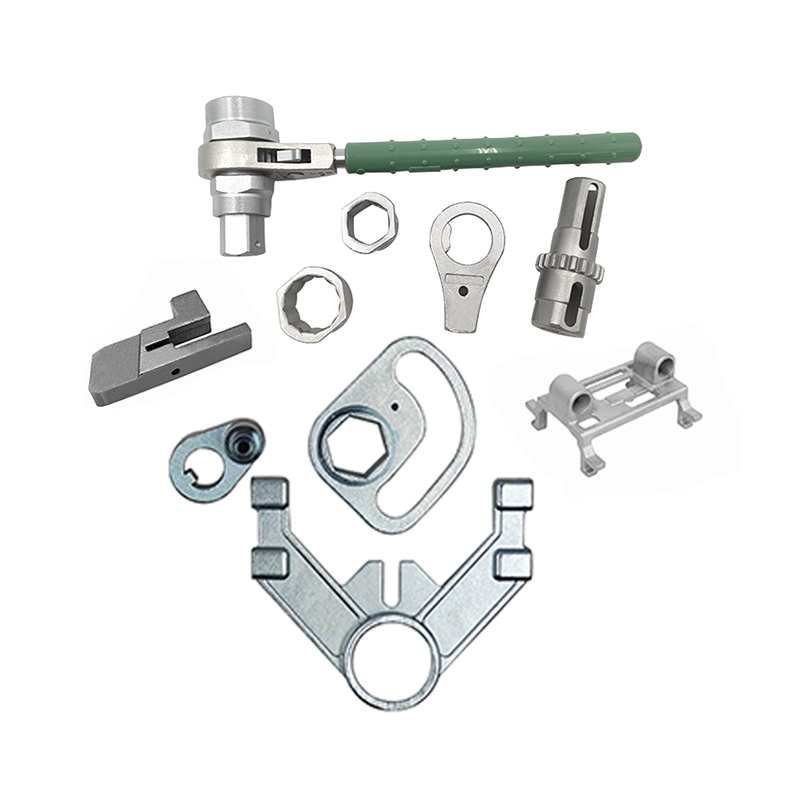
More than just manhole covers
Mention cast iron in construction, and most people picture manhole covers and drainage grates. That‘s not wrong—those are ubiquitous applications that most urban dwellers encounter daily. But they only scratch the surface of what cast iron does in the built environment.
From the structural frame of a high-rise to the decorative railings on a historic building, cast iron has been shaping architecture and infrastructure for more than two centuries. The material’s combination of compressive strength, castability, and durability has made it a mainstay in applications that range from the purely functional to the highly ornamental.
Structural columns and load-bearing elements
Cast iron‘s compressive strength is its most valuable structural property. A cast iron column can support enormous loads without crushing, which is why it became the material of choice for the first multi-story iron-framed buildings in the 19th century.
The ability to cast columns in decorative shapes was a bonus—architects could specify fluted surfaces, ornate capitals, and intricate bases that would have been prohibitively expensive to carve from stone. But the real breakthrough was structural. Cast iron columns could be slenderer than masonry supports while carrying equivalent loads, which meant more usable floor space and larger windows.
Today, cast iron columns are less common in new construction, but they remain a critical component in historic restoration projects. When a century-old building needs structural reinforcement, matching the original cast iron with modern reproductions requires foundries that understand both the metallurgy and the aesthetics of the period.
Bridge components and infrastructure
Bridges represent one of the earliest and most significant applications of cast iron in civil engineering. The material’s compressive strength made it ideal for arch bridges, where the load is transmitted primarily in compression.
Cast iron girders were used to support brick jack arch infill in bridge decks and building floors. This system—cast iron beams spanning between masonry walls, with brick arches filling the spaces between them—was a common construction technique in the 19th century. It provided fire resistance and structural integrity at a lower cost than all-iron construction.
In modern infrastructure, ductile iron has largely replaced gray iron for load-bearing applications. The improved tensile strength and ductility of ductile iron make it better suited for components that experience bending or impact loads. Water mains, sewer pipes, and storm drainage systems rely heavily on ductile iron pipe for its strength, longevity, and corrosion resistance. The global ductile iron pipe market reflects this ongoing demand.
Municipal hardware that keeps cities running
Manhole covers and road grates might be the most visible cast iron products in any city, but they represent just one category of municipal hardware.
Fire hydrant bodies, valve boxes, curb stops, and meter covers are all commonly produced as iron castings. These components need to withstand traffic loads, resist corrosion from road salts and chemicals, and maintain their structural integrity for decades with minimal maintenance.
| Application | Material Grade | Key Requirement |
|---|---|---|
| Manhole covers | Ductile iron (ASTM A536) | Impact resistance, traffic load capacity |
| Drainage grates | Ductile or gray iron | Open area, load rating, corrosion resistance |
| Pipe fittings | Ductile iron | Pressure rating, joint integrity |
| Valve bodies | Gray or ductile iron | Pressure containment, machinability |
| Fire hydrants | Gray iron | Impact resistance, corrosion protection |
| Tree pit covers | Ductile iron | Load capacity, aesthetic finish |
The standardization of these products is a testament to cast iron‘s reliability. Municipal engineers specify cast iron for these applications not because it’s the cheapest option, but because it has a proven track record of performance over decades of service.
Architectural ornamentation and restoration
One of the more charming applications of cast iron in construction is its use in decorative architectural elements. Cast iron railings, balconies, fences, and gates have adorned buildings for centuries.
The appeal of cast iron for ornamental work lies in its castability. Molten iron can be poured into intricate molds that capture fine detail—scrollwork, floral patterns, geometric designs—with remarkable fidelity. Once painted, cast iron ornamental work can mimic the appearance of wrought iron or even carved stone, but at a fraction of the cost.
Historic preservation is a significant driver of cast iron production today. When a landmark building needs replacement railings or restored balcony brackets, the new components must match the originals in both appearance and material properties. This requires foundries that can reproduce patterns from historical drawings or even from 3D scans of existing pieces.
A case from a downtown revitalization project
A mid-sized city in the Northeast was undertaking a major revitalization of its historic downtown district. The project included restoring cast iron storefronts that had been covered over or modified during the mid-20th century. Many of the original cast iron columns, lintels, and decorative panels were still in place but had suffered from decades of neglect—rust, broken sections, and missing ornamental details.
The restoration team worked with a foundry to reproduce missing components. The process started with detailed measurements and photographs of surviving elements. Patterns were created using a combination of traditional wood pattern-making and modern CNC-machined patterns for complex geometries. The castings were produced in gray iron, matching the original material specification, and finished with period-appropriate paints.
The project uncovered an interesting detail: some of the original 19th-century castings had subtle variations that modern CAD models initially tried to “correct.” The foundry advised the restoration team to preserve these variations—they were evidence of hand finishing and pattern adjustments that gave the original work its character. The final restoration maintained the authentic appearance while ensuring the new components met modern structural requirements.
Limitations and considerations
Cast iron in construction has its constraints. The material‘s tensile strength is lower than steel‘s, which means it‘s not suitable for applications where tension is the primary load. This is why cast iron beams in historic buildings are typically used in compression or with careful attention to the bending moments they can safely carry.
Corrosion is another consideration. Cast iron is susceptible to rust when exposed to moisture, particularly in the presence of road salts. Protective coatings—paint, galvanizing, or epoxy—are essential for long-term durability in outdoor applications.
The brittle nature of gray iron also means that impact resistance is limited. This is why ductile iron has largely replaced gray iron for applications like manhole covers and traffic-bearing components. The nodular graphite structure of ductile iron provides the impact resistance that gray iron lacks.
The foundry connection
Jinbianda Foundry serves construction-related applications with iron castings that range from municipal hardware to architectural components. Their capabilities in both gray and ductile iron allow them to address the diverse requirements of the construction sector—from the functional demands of infrastructure to the aesthetic needs of architectural restoration. For contractors and developers who need castings that perform reliably and look the part, having a foundry that understands both the engineering and the aesthetics makes a real difference.
Table of Contents
- More than just manhole covers
- Structural columns and load-bearing elements
- Bridge components and infrastructure
- Municipal hardware that keeps cities running
- Architectural ornamentation and restoration
- A case from a downtown revitalization project
- Limitations and considerations
- The foundry connection