
 EN
EN



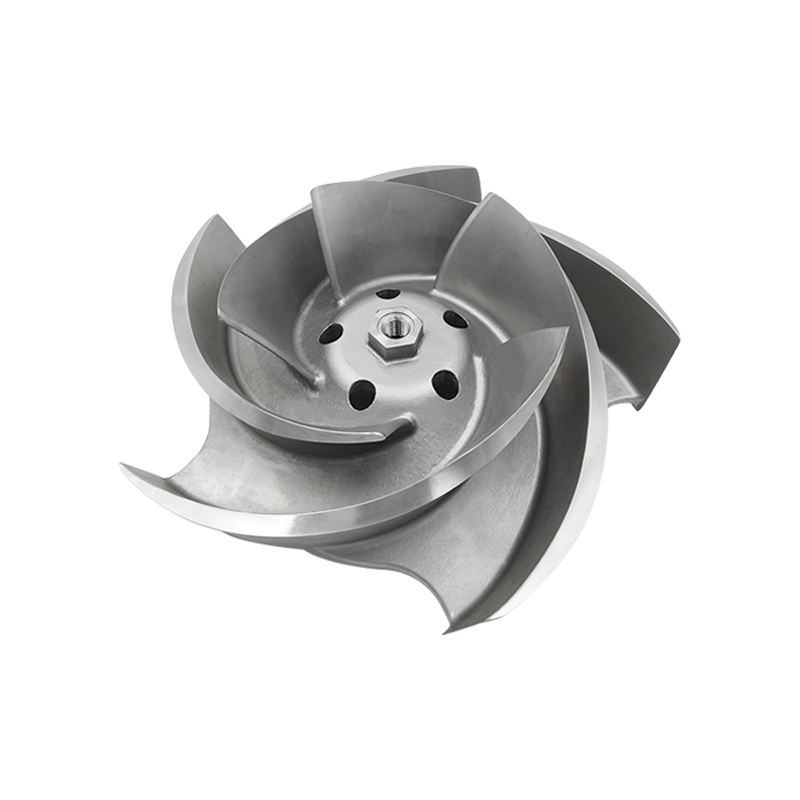
The Austenitic Advantage at Elevated Temperatures
Stainless steel casting holds its own in hot environments largely because of its austenitic structure. Grades like CF8 and CF8M, the cast equivalents of 304 and 316, keep a face-centered cubic lattice from room temperature up to the melting range. This structure does not undergo the phase transformation that ferritic steels experience, so there is no abrupt loss of strength tied to a crystal structure change. Instead, strength declines gradually with temperature, giving designers a predictable performance envelope for components such as furnace racks, tube hangers, and burner nozzles.
Scaling Resistance and the Role of Chromium Oxide
What really kills a steel part at high temperature is not just softening but oxidation. Stainless steel casting resists scaling because the chromium in the alloy forms a dense, adherent chromium oxide layer on the surface. This film acts as a diffusion barrier, slowing down further oxygen attack. The effect is concentration dependent. An alloy with 18 percent chromium holds up reasonably well at 870°C, but pushing the chromium content toward 25 percent, as in the cast grade CK20, extends the practical service limit past 1,000°C. Nickel also chips in by stabilizing the austenite and improving the oxide layer’s adhesion during thermal cycling.
Creep Behavior in Cast Stainless Components
Creep, the slow permanent deformation under constant load at high temperature, dictates the life of many furnace parts. The cast grain structure, with its interdendritic carbides, can be both a blessing and a curse. Fine, dispersed carbides pin grain boundaries and hinder creep void formation initially. Over thousands of hours, however, those carbides can coarsen, and new phases like sigma may precipitate, gradually eroding creep strength. Cast stainless grades designed for high-temperature service, particularly those under ASTM A297, balance chromium, nickel, and carbon to maintain a stable carbide network well into the operating life of the component.
Selecting the Right Grade: A Data-Driven Look at 304, 316, and 310
Every alloy has a temperature ceiling where oxidation accelerates and strength falls off a cliff. The table below compares three widely used cast stainless grades.
| Cast Grade (Wrought Equivalent) | Nominal Cr-Ni (%) | Max. Continuous Service in Air (°C) | Approx. Tensile Strength at 800°C (MPa) | Creep Resistance |
|---|---|---|---|---|
| CF8 (304) | 19 Cr, 9 Ni | 870 | 90 | Moderate |
| CF8M (316) | 19 Cr, 10 Ni, 2.5 Mo | 870 | 95 | Slightly improved |
| CK20 (310) | 25 Cr, 20 Ni | 1050 | 120 | Excellent |
Data compiled from heat-resistant alloy references, including the ASM Specialty Handbook on Stainless Steels, shows that the jump from CF8 to CK20 can more than double the practical service life in cyclic oxidation conditions. Molybdenum in CF8M improves creep resistance only marginally; the main game-changer for sustained high temperature is the chromium and nickel balance.
Lessons from a Heat-Treat Fixture Failure
A commercial heat-treat shop in Ohio ran basket-type fixtures cast in CF8 for carburizing cycles at 925°C. After roughly four months of continuous operation, the fixtures began to sag by several millimeters, distorting the parts they carried. A post-mortem revealed heavy oxidation along grain boundaries and significant carbide coarsening. The shop replaced the fixtures with CK20 castings. The higher chromium and nickel content doubled the replacement interval, and the improved dimensional stability reduced scrap from distorted parts by an estimated 15 percent. The switch paid for itself within a year, even though the CK20 castings cost about 30 percent more upfront.
Balancing Thermal Expansion and Cyclic Service
Stainless steel castings do expand more than carbon or low-alloy steels. For a component that cycles between room temperature and 900°C several times a day, thermal fatigue can crack the oxide layer and open fresh metal to oxidation. Designing in generous radii, avoiding sharp section changes, and selecting a grade with sufficient ductility at operating temperature all matter as much as the chemistry. The casting process itself offers an edge here because it can form smooth transitions and uniform wall sections that reduce the stress concentrations where thermal cracks like to start. Foundries that specialize in high-temperature alloys, such as JBD, lean on their pattern design and solidification modeling to push the life of these castings well past what a rough fabrication could achieve.