
 EN
EN



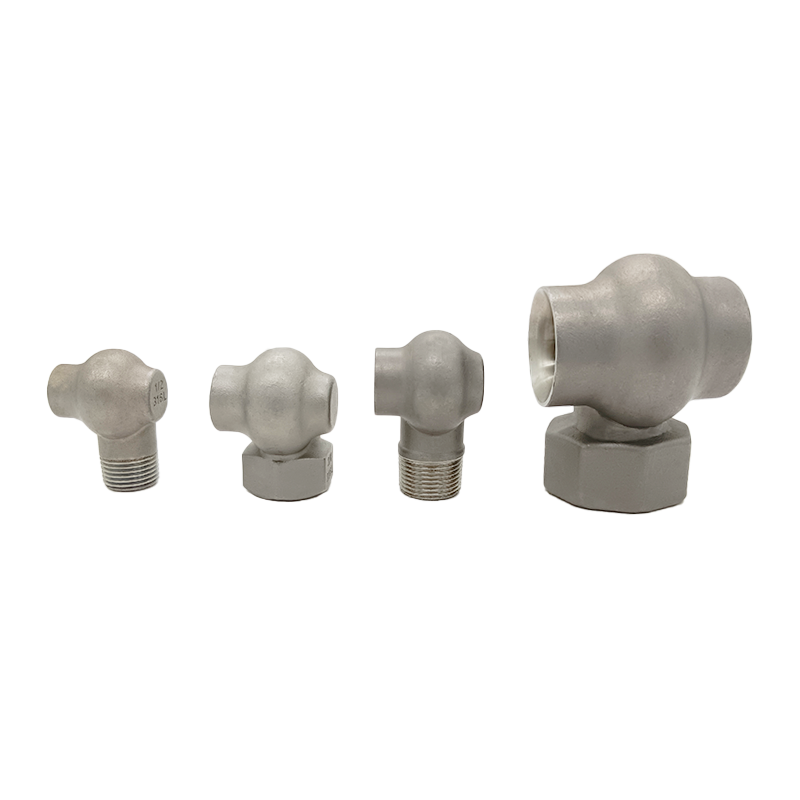
Complex Single-Piece Designs That Minimize Crevice Corrosion
Surgical instruments are packed with fine details such as box locks, ratchets, and slender finger rings. When these features are assembled from multiple stamped or welded subcomponents, the resulting seams become perfect traps for biological debris. Even a microscopic crevice can trigger crevice corrosion once the instrument is exposed to chlorides in bodily fluids or aggressive sterilization chemistries. Stainless steel casting sidesteps this entirely by delivering the entire geometry as a single homogeneous piece. No weld lines, no brazed joints, and no mechanical interlocks remain after the part leaves the mold. A hemostat or needle holder can emerge from the investment casting process with its hinge geometry fully formed, so the only downstream operations are heat treatment and final polishing. Eliminating hidden cavities at the design stage removes the primary initiation site for both corrosion and bacterial colonization.
Passivation and the Demand for Cleanability
A cast surface that has been properly cleaned and passivated develops a uniform chromium oxide film. This layer is what gives stainless steel its ability to withstand repeated autoclave cycles without rusting or pitting. Passivation treatments, typically performed to ASTM A967 standards, strip free iron from the surface and enrich the chromium content, reinforcing that passive barrier. Investment cast parts respond particularly well to passivation because they are free of the thick scale and subsurface oxides often found on sand castings or hot forgings. In a hospital setting, where a single instrument may be sterilized several times a day, the passive film must remain intact. Once pits form, they harbor biofilm that steam cannot reliably penetrate, and the instrument becomes a cross-contamination risk. A dense, uniform passive layer formed right after casting is the foundation of long-term cleanability.
Material Standards: From ASTM F899 to 17-4 PH
Material selection for surgical instruments is anything but casual. ASTM F899 defines chemical requirements for wrought stainless steels used in surgery, and many cast grades are tailored to meet the same compositional boundaries. The table below captures alloys frequently specified for cast surgical instruments.
| Alloy | Condition | Typical Hardness (HRC) | Corrosion Resistance | Example Instrument |
|---|---|---|---|---|
| 304 (CF8) | Annealed | 15–20 | Good | Retractors, handles |
| 316 (CF8M) | Annealed | 20–25 | Better (pitting) | Ophthalmic instruments |
| 17-4 PH (CB7Cu) | H900 aged | 40–44 | Good | Forceps, clamps |
| 440C | Hardened | 56–58 | Moderate | Cutting blades |
Austenitic grades like CF8 and CF8M provide excellent corrosion resistance but cannot be hardened beyond what cold working allows. Where the instrument must hold a spring temper or maintain a sharp cutting edge, precipitation-hardening grades such as 17-4 PH become the workhorse. These alloys respond to a simple aging treatment to reach hardness levels that standard 300-series stainless steels cannot achieve while still passing the corrosion tests mandated by ISO 7153-1 for surgical instruments. The casting route makes it practical to use these higher-strength alloys in complex net-shape geometries that would be punishing to machine from bar stock.
How Investment Casting Supports Micro-Polished Surfaces
Surface finish on a surgical instrument is not just about aesthetics. A scratch or pit deeper than a few microns can shelter biofilm, and steam sterilization cannot reliably penetrate those micro-recesses. Investment casting begins with a smooth wax pattern, and the ceramic shell reproduces that smoothness with high fidelity. The as-cast surface often lands in the 3.2 to 6.3 µm Ra range, which means only a light polishing step is needed to bring the finish below 0.8 µm Ra, a common target for instruments that contact tissue. Foundries serving the medical sector take additional steps, such as using ultra-fine zircon primers and controlling shell permeability, to minimize near-surface defects. Reducing the amount of polishing stock removed also preserves the delicate geometry of features like ratchet teeth and box-lock clearances, which are easy to round over if an operator spends too much time on the buffing wheel.
A Surgical Instrument Redesign That Eliminated Welded Joints
A manufacturer of laparoscopic graspers had built the jaw assembly for years by welding two stamped halves around a pivot pin. After passivation, the welded joint would pass initial inspection, but after a few dozen autoclave cycles, discoloration and microscopic pits routinely appeared at the weld line. Cleaning validations using protein swab tests failed repeatedly, and the line was bleeding money in scrap and rework. The company replaced the fabricated jaw with an investment cast 17-4 PH one-piece design. The casting merged the two jaws and the pivot bore into a single part, eliminating the weld entirely. Aged to H900 condition, the jaws maintained consistent spring tension through more than 5,000 actuation cycles in a heated saline soak test designed to simulate five years of clinical use. Post-test swabs for residual protein came back clean in every trial. Locking in the correct pivot clearance required tweaking the wax tooling to compensate for solidification shrinkage, but once dialed in, the casting delivered the tolerance band without any secondary machining on the hinge.
Weighing Cost Against Clinical Risk in Material Selection
Nobody in the medical device industry pretends that stainless steel casting is the cheapest way to produce a pair of surgical scissors. The value proposition centers on risk reduction. A single-piece casting removes the failure mode of a weld or braze joint cracking during a procedure, a scenario that carries catastrophic clinical consequences. It simplifies cleaning validation and strengthens the traceability chain required by ISO 13485 quality management systems. For instruments that enter the body or manipulate critical tissue, the incremental cost of a precision casting is negligible compared with the cost of a single adverse event. Suppliers who maintain dedicated medical production cells and rigorous material certifications, such as JBD, give device companies the process control and documentation needed to meet these risk targets without layering unnecessary complexity onto the supply chain.
Table of Contents
- Complex Single-Piece Designs That Minimize Crevice Corrosion
- Passivation and the Demand for Cleanability
- Material Standards: From ASTM F899 to 17-4 PH
- How Investment Casting Supports Micro-Polished Surfaces
- A Surgical Instrument Redesign That Eliminated Welded Joints
- Weighing Cost Against Clinical Risk in Material Selection