
 EN
EN



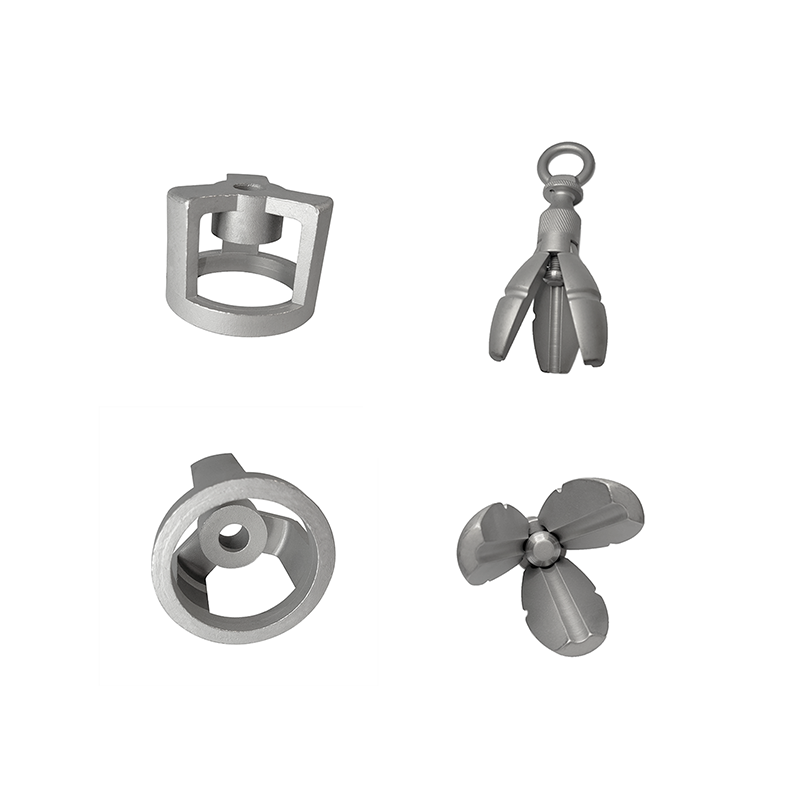
The backbone that doesn‘t get talked about enough
Construction machinery lives a hard life. Excavators dig into rocky ground. Loaders carry tons of material day after day. Bulldozers push against obstacles that don’t want to move. The components that make up these machines have to withstand forces that would tear lesser materials apart.
Iron casting has been a cornerstone of heavy equipment manufacturing for generations, and for good reason. The combination of strength, wear resistance, and vibration damping that cast iron provides is difficult to replicate with any other manufacturing approach. When a machine is expected to perform reliably for thousands of hours in punishing conditions, the metallurgical choices made during production matter enormously.
Strength that takes a beating and stays in the game
The mechanical properties of cast iron vary across different grades, but the common thread is exceptional compressive strength. Gray iron, ductile iron, and compacted graphite iron each offer distinct advantages for different applications.
Ductile iron, in particular, has become a go-to material for critical structural components in construction equipment. Its nodular graphite structure gives it tensile strength that approaches steel while retaining the casting characteristics that make iron so workable. This combination of strength and castability is what makes ductile iron so prevalent in applications like axle housings, suspension components, and steering knuckles.
For components that need to withstand cyclic loading—think of a hydraulic cylinder mount that gets stressed every time the machine operates—the fatigue resistance of ductile iron is a major advantage. It doesn‘t crack easily under repeated stress, which translates directly to longer service life and fewer unexpected failures in the field.
Vibration damping that saves more than just comfort
One of cast iron’s most underrated properties is its ability to absorb vibration. This is sometimes called damping capacity, and it matters a lot in construction machinery.
When a hydraulic pump runs at high pressure, or when an excavator‘s bucket impacts hard material, the resulting vibrations travel through the machine‘s structure. If those vibrations aren’t damped effectively, they can cause premature wear on bearings, loosen fasteners, and create fatigue cracks in sensitive components.
Cast iron‘s internal microstructure—particularly the graphite flakes in gray iron—acts like a series of tiny shock absorbers. This is why machine tool bases have historically been made from cast iron, and it’s the same reason why engine blocks, transmission housings, and pump bodies in heavy equipment are so often iron castings. The material doesn‘t just hold things together—it makes the whole machine run smoother and last longer.
Wear resistance that keeps parts in spec
Construction machinery operates in environments full of abrasive materials. Dirt, sand, gravel, and rock dust find their way into every crevice. Components that slide, rotate, or oscillate against each other are constantly under attack from this particulate assault.
Cast iron excels in these conditions. The graphite in the microstructure provides a certain degree of self-lubricating property, which reduces friction between moving parts. And when the iron contains alloying elements like chromium or nickel, the wear resistance improves even further.
Consider the bushings and pins in an excavator’s linkage. These components see rotational movement under heavy load, often in dusty conditions. Iron castings with appropriate hardness and microstructure can outlast steel components in the same application by a significant margin. The material doesn't gall or seize as readily, which means less downtime for maintenance and fewer replacement parts over the equipment's life.
The economics of scale that make sense for heavy industry
| Property | Gray Iron | Ductile Iron | Cast Steel |
|---|---|---|---|
| Tensile strength | Moderate (200–400 MPa) | High (400–900 MPa) | Very high (450–2000+ MPa) |
| Compressive strength | Excellent | Excellent | Good |
| Damping capacity | Excellent | Good | Poor |
| Wear resistance | Good | Very good | Variable |
| Castability | Excellent | Good | Fair |
| Machinability | Excellent | Good | Fair to good |
| Relative cost per part | Lowest | Moderate | Highest |
Construction machinery manufacturers face constant pressure to balance performance with cost. Iron casting offers an attractive middle ground that steel simply cannot match.
The casting process itself is efficient for the large, complex shapes that heavy equipment requires. Patterns can be reused thousands of times. The material is relatively inexpensive compared to alloy steels. And the near-net-shape capability of casting means less machining, less material waste, and shorter lead times.
For a transmission housing that weighs several hundred pounds, machining it from a solid billet would be prohibitively expensive and wasteful. Casting it in iron produces a part that‘s already close to final dimensions, with only critical mating surfaces requiring finishing operations.
A case from a heavy equipment supplier
A manufacturer of large excavators was experiencing field failures in the swing drive housing—the component that transfers power from the engine to the machine’s turntable. The housing was cracking at the mounting flange after roughly 4,000 hours of operation, and each failure meant a costly repair and days of downtime.
The original design used a fabricated steel assembly—multiple plates welded together. The welding created heat-affected zones with altered metallurgy, and the stress concentrations at the weld toes were the starting points for fatigue cracks.
The switch to a ductile iron casting eliminated the weld joints entirely. The housing was redesigned as a single, integrated casting with generous radii at all transitions. Finite element analysis confirmed that the stress distribution was more uniform, and the material‘s inherent damping capacity reduced the vibration-induced loading on the mounting points.
Field data from the first machines with the new casting showed no housing failures past the 6,000-hour mark. The casting also simplified production—fewer pieces to inventory, fewer assembly steps, and a more predictable manufacturing process.
Where iron casting falls short
No material is a universal solution, and iron casting has its limitations. The tensile strength of even the best ductile iron grades doesn’t match that of high-strength alloy steels. For applications that require extreme tensile loads or impact resistance beyond what iron can provide, steel remains the better choice.
Cast iron is also more brittle than steel, particularly in thinner sections. Impact loading—the kind that happens when a rock falls onto a guard plate, for example—can cause fractures in iron castings that steel would survive. Designers need to account for this by specifying adequate section thicknesses and avoiding sharp corners where stress can concentrate.
The foundry that produces these castings also matters enormously. Inconsistent melting practices, poor gating design, or inadequate inoculation can result in castings with graphite structures that don‘t meet specification. The difference between a good iron casting and a great one often comes down to process control at the foundry level.
A foundry that understands heavy equipment
Jinbianda Foundry has built a reputation for serving industrial machinery applications with iron castings that meet the demanding requirements of construction equipment. Their capabilities span the range from gray iron to ductile iron, with the process controls necessary to deliver consistent metallurgy across production runs. For equipment manufacturers who can’t afford to compromise on component reliability, having a foundry that understands the unique demands of the construction sector makes all the difference.
Table of Contents
- The backbone that doesn‘t get talked about enough
- Strength that takes a beating and stays in the game
- Vibration damping that saves more than just comfort
- Wear resistance that keeps parts in spec
- The economics of scale that make sense for heavy industry
- A case from a heavy equipment supplier
- Where iron casting falls short
- A foundry that understands heavy equipment