Summary
Investment casting (lost-wax casting) is a critical manufacturing process for producing high-performance metal components in the automotive sector. This technique enables the creation of complex, net-shape parts with superior surface finish and dimensional accuracy, which are essential for modern engines, transmissions, and new energy vehicles (NEVs). It addresses key industry challenges by allowing for design freedom, the use of advanced alloys, and significant weight reduction, thereby supporting goals for increased efficiency, power, and sustainability.
Key Benefits and Automotive Applications
Investment casting provides specific advantages that make it indispensable for automotive engineering, particularly where component geometry and material integrity cannot be compromised.
1. Enabling Complex Geometries and Integrated Designs
Traditional machining or forging methods often reach their limits when faced with intricate internal pathways and thin-walled structures. Investment casting, however, offers engineers almost limitless design freedom.
Part Consolidation: This process allows multiple separate parts to be combined and cast as a single, integrated component. By reducing the number of assembly points, welds, and fasteners, it minimizes both assembly costs and potential failure points caused by mechanical fatigue.
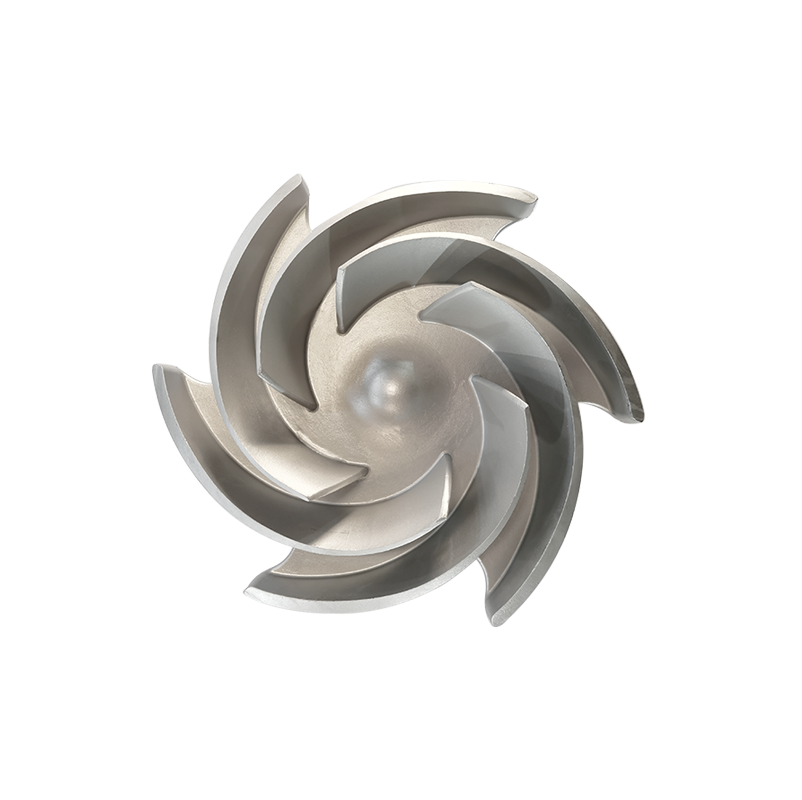
Turbocharger Components: Turbocharger wheels and housings feature complex, twisted blades that must endure extreme rotational speeds and temperatures exceeding $900^\circ\text{C}$. Investment casting is the only viable mass-production method that can achieve these precise fluid-dynamic shapes while maintaining high structural integrity.
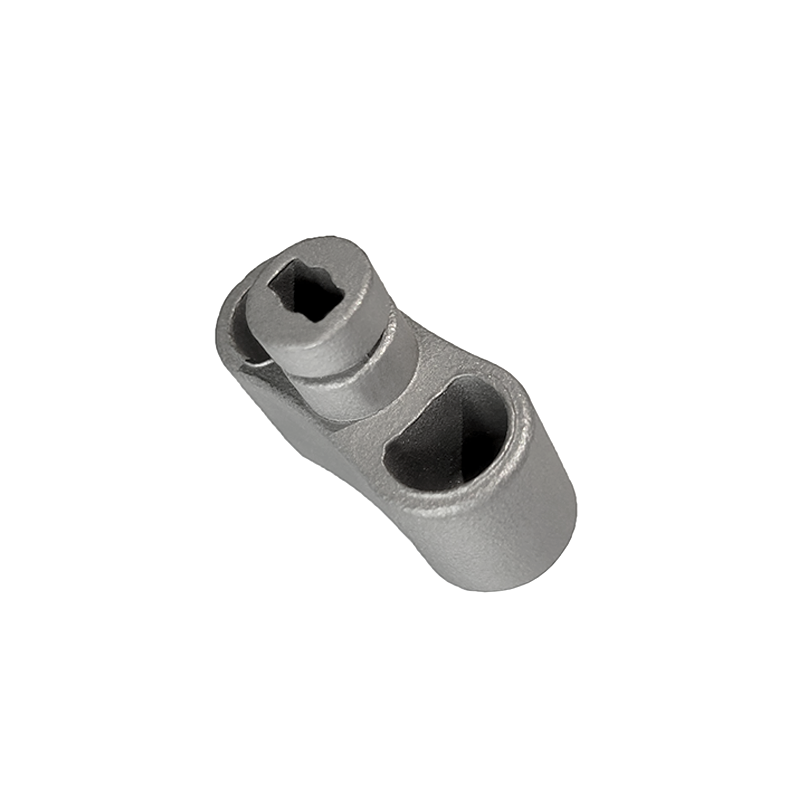
Engine and Chassis Systems: Complex exhaust manifolds, EGR (Exhaust Gas Recirculation) valves, sensor housings, and hydraulic control valve blocks rely heavily on this process to achieve precise internal cavities and mating surfaces.
2. Enhancing Performance with Superior Material Properties
Automotive components require not only outer precision but also flawless internal structures. Investment casting supports a massive array of materials, from lightweight aluminum and magnesium alloys to stainless steel and nickel-based superalloys.
Excellent Mechanical Properties: Combined with modern vacuum melting and controlled solidification techniques, investment casting produces a fine, uniform grain structure within the metal. This significantly enhances the component's fatigue resistance, wear resistance, and fracture toughness—qualities that are absolutely critical for safety-related parts like steering and braking systems.
3. Driving Lightweighting and Efficiency
As a general rule, a 10% reduction in vehicle weight translates to a 6% to 8% improvement in fuel economy. Investment casting contributes directly to this goal by allowing precise control over wall thickness—reinforcing areas under high stress while thinning or hollowing out non-critical regions. This optimizes material distribution, lowers emissions for internal combustion vehicles, and directly extends the driving range of electric vehicles (EVs).
Technical Specifications and Evolving Capabilities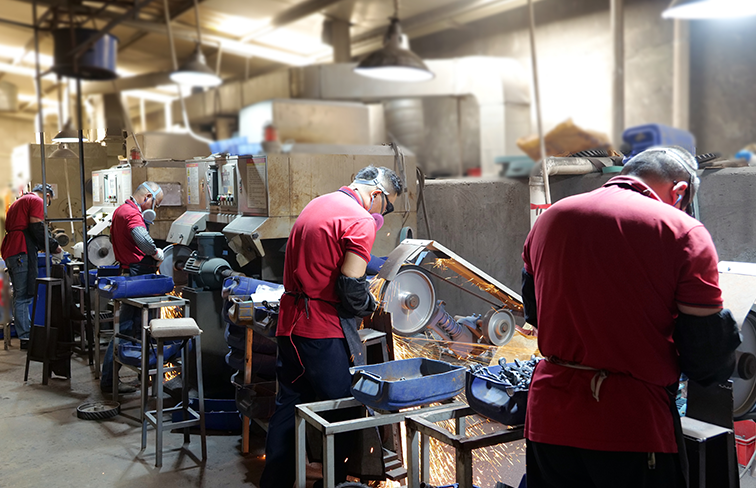
While the core steps of wax pattern creation, ceramic shelling, and metal pouring remain the same, modern technology has vastly advanced the process.
1. Advanced Material Adoption
With the industry push toward high power density and lightweight designs, materials like titanium alloys and high-strength aluminum-lithium alloys are transitioning from aerospace applications straight into high-end passenger vehicles and motorsports via investment casting.
2. Hybrid Manufacturing (3D Printing Integration)
During the prototyping phase, traditional mold-making can take weeks. Today, the integration of 3D printing to directly create wax or resin patterns (SLA/SLS technology) bypasses the need for hard tooling entirely.
Key Advantage: This "tool-less" rapid prototyping cuts new product development time from months down to a few days. It also allows engineers to test complex, topologically optimized geometries that would be impossible to extract from a traditional physical mold.
3. Process Simulation Software
Utilizing advanced casting simulation software (such as ProCAST or MAGMASOFT), engineers can virtually simulate the entire pouring and solidification sequence before any metal is melted. By predicting defects like air entrapment, cold shuts, and shrinkage cavities, the gating system can be optimized beforehand, minimizing manufacturing trial-and-error and ensuring high yield rates during mass production.
Critical Role in New Energy Vehicle (NEV) Development
The automotive shift toward electrification has created an entirely new ecosystem of demand for high-precision investment cast parts.
E-Drive Systems: Electric motors and high-voltage inverters generate massive amounts of localized heat. Investment casting is used to manufacture motor end caps and inverter bases integrated with micro-channel cooling jackets to maximize heat dissipation.
Battery Thermal Management: Battery packs are highly sensitive to temperature fluctuations. Investment-cast liquid cooling plates and refrigerant valves feature ultra-thin walls and excellent sealing capabilities, meeting the strict space and weight constraints of modern EV battery compartments.
Chassis and Structural Components: The heavy weight of EV battery packs requires lightweighting elsewhere to balance vehicle dynamics. Aluminum investment-cast nodes, subframe connectors, and shock towers provide high structural rigidity at a fraction of the weight of stamped steel assemblies.
Customer FAQs
Q1: Is investment casting suitable for the high volumes required by the automotive industry?
A: Absolutely. While historically associated with low-to-medium volumes, modern investment casting facilities feature high levels of automation. Utilizing multi-station wax injection machines, robotic tree assembly, automatic ceramic shell dipping, and multi-cavity molds, a single production line can reliably produce millions of high-performance components (like turbocharger wheels) per year.
Q2: How does the cost compare to other methods like forging or machining?
A: Cost efficiency must be looked at through total per-part production cost. For complex shapes, traditional machining can result in material waste exceeding 70%, driving up raw material and labor costs. Forging, while strong, cannot produce intricate internal channels.
Investment casting is a near-net-shape process, meaning the cast part is incredibly close to its final dimensions, requiring minimal or no secondary machining. This drastically cuts down on material waste and cycle times, making it highly cost-effective for complex, high-value components despite the higher initial tooling costs.
Q3: What are the typical lead times for a new automotive investment casting project?
A: Lead times depend on the specific stage of the project:
Prototyping Stage: Using 3D-printed patterns (without hard tooling), initial metal prototypes can be delivered in 2 to 4 weeks.
Mass Production Stage: Designing, manufacturing, and qualifying traditional steel hard tooling, followed by PPAP (Production Part Approval Process) cycles, typically takes 8 to 16 weeks, depending on part complexity and the OEM's specific approval protocols.
 Hot News
2026-04-01
2026-03-31
2026-03-30

Dongguan Jinbianda Hardware provides custom stainless steel precision casting for aerospace, medical, automotive & energy sectors. ISO9001-certified, 25+ years expertise, 300+ global clients. Request a quote today.
102, Building 4, No. 10 Longyuan Street, Chang'an Town, Dongguan City, Guangdong Province
Copyright © 2026 by Dongguan Jinbianda Hardware Products Co., Ltd. Privacy Policy

 EN
EN